Common areas
General Cleaning & Sanitizing
Lobbies, corridors, stairwells and shared rooms, cleaned and sanitized on a schedule built around the property.
Entry glass, elevator cabs and stair rails show the wear first
In a shared building, dirt does not spread evenly. It collects where hands, shoes and wheels all meet: the entry glass at hand height, the elevator cab floor and its button panel, the carpet edge along a corridor wall, the stair rail that every resident grips on the way up. A common area can look fine from the middle of the room and still feel neglected the moment someone touches something.
That is why general cleaning at a Seattle HOA or apartment building starts with those spots, not with the middle of the floor. Glass gets wiped until it stops streaking. Rails and door pulls are cleaned and sanitized, because they are the surfaces the most people share. Corridor carpet is vacuumed edge to edge, including the strip along the baseboard that a quick pass skips.
Commercial properties have the same pattern with different furniture: a reception counter, a lobby door, a shared restroom handle. The habit is the same in every kind of building: find the places people touch, and give those the attention first.
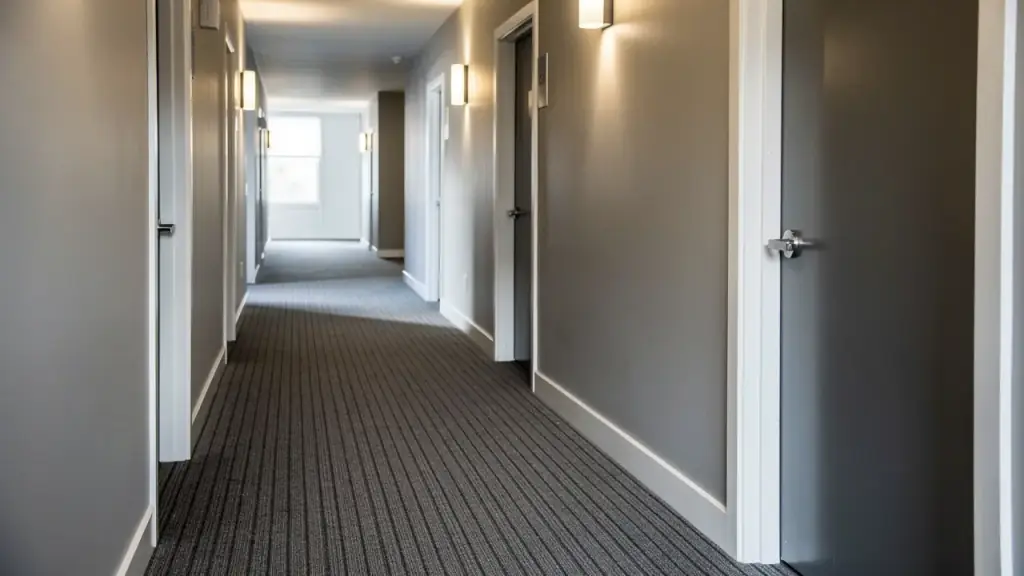
An apartment building corridor with a freshly vacuumed carpet runner and wiped door frames
Why a route beats a mood
A cleaning visit goes better when it follows a route instead of a mood. Working a building in a fixed order, top floor down, is how this is done well: it means that whatever falls from a higher floor is picked up on the way past and nothing already cleaned gets walked across again. Dusting and wiping come before vacuuming and mopping, for the same reason.
Touch points are sanitized as part of that route, not as an extra task someone might forget. Door handles, rails, elevator buttons and the intercom panel at the entry are all on the list, building after building. When the order never changes, the result never depends on who happens to be holding the vacuum that day.
The route is also how a crew notices things. Someone walking every corridor and stairwell on a set round will see the flickering fixture, the loose handrail bracket or the stain that is new since last week. That is the difference one longtime client described in his Google review, a cleaner who notices maintenance and safety issues and keeps owners and community managers in the loop.
Residents judge the building at the door, so the schedule fits the property
People decide how a building is run within a few steps of the front door. A clean lobby, clear glass and a corridor that smells like nothing at all tell a resident that someone is paying attention, and that carries over to how they feel about their HOA dues or their lease.
There is no standard schedule that suits every property. A small apartment building with a single lobby needs something different from a large HOA with several entries, stairwells and shared rooms, and a commercial space has its own foot traffic and its own quiet hours. Mercury customizes the offering for each property, which is why the quote is built around the building instead of read off a price list.
If you manage a property in Seattle and want to talk through what the common areas need, call (206) 374-7777 or email info@mercuryclean.com. Tell the office which spaces are shared, how many people use them, and where the complaints usually start. That is enough to begin shaping a plan around the building.
Privately owned and operated since 2001. Call (206) 374-7777.