What an HOA Board Should Put in a Common-Area Cleaning Scope
A clear scope of work prevents most cleaning disputes before they start, and it takes one walk through the building to write.
October 26, 2026 · 4 min read
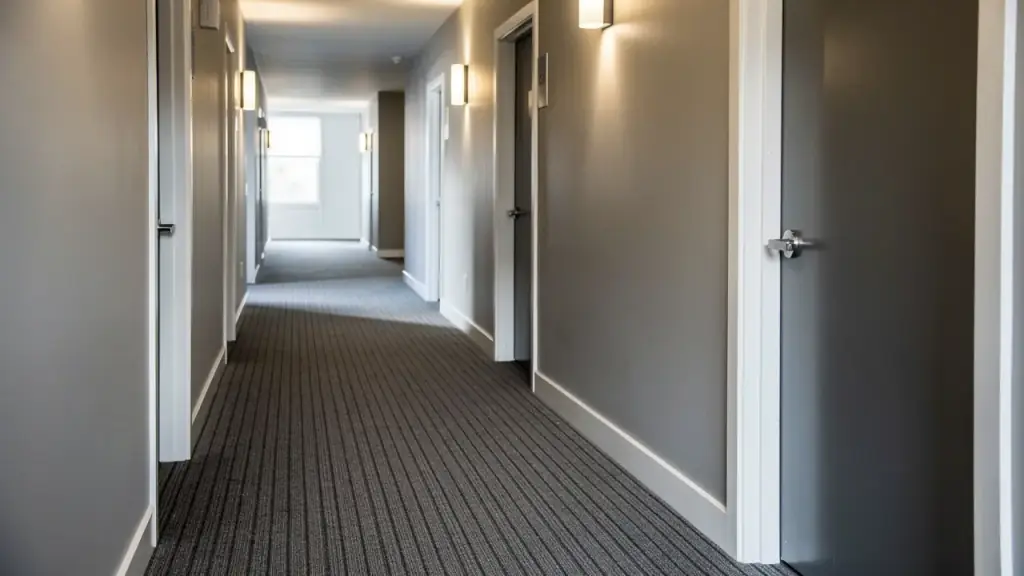
Most cleaning disputes in a shared building start the same way. The board thought the contract covered something, the crew thought it didn't, and a resident is standing in the lobby holding a complaint. A good scope of work prevents nearly all of it. It doesn't need to be long. It needs to be specific about places and plain about results.
Here's how a board or a community manager can put one together before asking any company for a quote.
Start by walking the property
Walk the building with the person who takes the complaints, usually the property manager. Write down every space a resident, a guest or a delivery driver touches between the street and the unit door. Boards tend to list the lobby and forget the places that generate the most phone calls. The trash chute room on the fourth floor. The laundry room. The dumpster pad behind the building. The awning over the front entry. The walkway where the leaves collect every fall.
List every zone by name
A scope that says "common areas" leaves too much to interpretation. A scope that names each zone leaves very little. Think of it as the route a porter would walk, one space at a time.
- Entry and lobby: floors, glass, door hardware, mats and the mailbox area
- Hallways and stairwells: floors, handrails, light fixtures and the corners where dust gathers
- Elevators: floors, walls, buttons and door tracks
- Trash chute rooms: hopper doors, floors, walls and the area around the chute
- Shared laundry rooms: machines, counters, floors and drains
- Dumpster pad and enclosure: the pad, the bins, and trash and recycle staging
- Exterior: awnings, entry walkways, steps, planters and grounds
- Garage and parking areas: entries, stairwells and elevator lobbies
Describe the result, not only the task
"Vacuum the hallway" tells a crew what to do. It doesn't tell them when they're done. Add a sentence about the finished condition: floors free of debris, glass without streaks, door frames wiped, nothing left in the corners. When a resident calls, the board can point to the sentence instead of arguing about what anyone meant.
Ask for the condition you actually care about. If the entry is what visitors judge the building by, say so, and say that it gets attention first.
Separate the routine from the occasional
Some work happens on every visit and some happens now and then. Mixing the two confuses pricing and confuses residents. Put routine work in one list and periodic work in another: washing machine deep cleans, awning cleaning, pressure washing, glass detail, move-out turnovers. The board decides how often each periodic item should happen, and that decision belongs in the scope, in writing. How often depends on the building, its foot traffic and its budget, so there isn't one answer that fits every property.
Decide who handles the small stuff
Every building has odd jobs that nobody puts in a contract. A burned-out hallway bulb. A stained carpet at a unit door after a move. A bag that missed the chute. Decide up front whether the cleaning company handles these or whether the manager calls someone else. Mercury Commercial Cleaning lists lightbulb replacement, move in and move out cleaning, and special projects right alongside general cleaning and sanitizing, so a board can fold those into one relationship if it wants to.
It also helps to say how you want to hear about problems. A crew that notices a leaking pipe, a loose handrail or a flickering light is doing the board a favor, but only if there's a clear way to pass that along.
Write down how you'll talk to each other
A scope covers the work. It should also cover communication. Who does the property manager call when something comes up on a day the crew isn't scheduled? How are last-minute requests handled? Who gets the notes after a visit? One Mercury client, Kathleen Hannon, wrote in a Google review that they "are very responsive to last minute requests". That's the kind of behavior worth putting into your expectations, because it's the part residents feel.
Ask for a quote built on your property
Be wary of a flat quote that shows up without a site visit. A real quote reflects the number of floors, the number of units, how many laundry rooms and chute rooms you have, and what the exterior looks like. Mercury says it customizes its offerings to each property's specific needs, and that's how it should work: you hand over your zone list and your scope, and the company prices what's actually there. When two quotes come back different, compare the zone lists first. The gap is usually in what one of them left out.
A short checklist before you send it out
- Every zone named, including chute rooms, laundry rooms, the dumpster pad and exterior surfaces
- A finished condition described for each zone
- Routine work and periodic work in separate lists
- A decision on odd jobs such as bulbs, move-outs and one-off projects
- A named contact on each side and a way to reach them between visits
- A note if the board wants green cleaning, which Mercury offers on request
If you'd like to talk through a scope for your building, call Mercury Commercial Cleaning at (206) 374-7777 or email info@mercuryclean.com. Tell them what the property looks like and they'll put a quote together around it.
Mercury Commercial Cleaning Inc., (206) 374-7777
Call (206) 374-7777More articles
How to Keep a Trash Chute Room From Smelling
A chute room smells because residue sits on surfaces, and the fix is cleaning those surfaces, not spraying over them.
Why Shared Laundry Rooms Need More Than a Mop
Residents judge a laundry room by how the machines smell, so the machines deserve their own line in the cleaning scope.