Why Shared Laundry Rooms Need More Than a Mop
Residents judge a laundry room by how the machines smell, so the machines deserve their own line in the cleaning scope.
October 26, 2026 · 4 min read
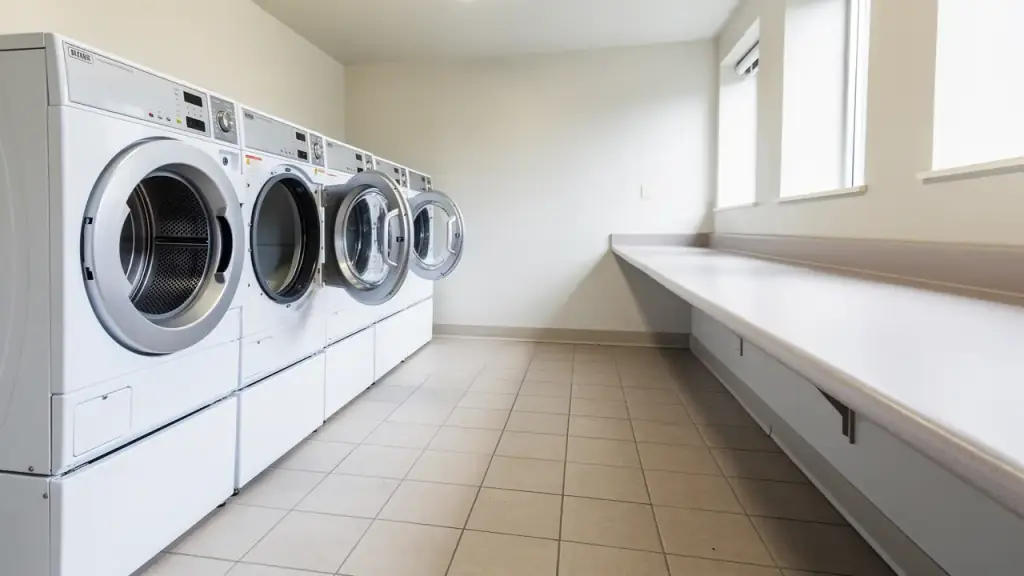
In an apartment building or a condo community, the laundry room is one of the few shared spaces that residents use constantly and judge quickly. If the floor is clean but the washer door smells like a wet towel, the room still feels neglected. Residents don't separate the two. They just decide whether they trust the place with their clothes.
Why washing machines get that smell
A washer is a drum that stays damp. Detergent and softener leave a film on surfaces. Lint and hair collect in traps and drains. On a front-loader, water pools in the folds of the rubber door seal and sits there between loads. Put those together in a warm room that nobody ventilates and you get the sour, musty smell residents describe as the machines being dirty. They're usually right.
Wiping the outside doesn't touch any of that. The smell lives in the parts you can't see from the middle of the room, which is why a washing machine deep clean is a different job from cleaning the room. Mercury Commercial Cleaning lists the two separately on its services page: laundry services, and washing machine deep clean.
What a deep clean looks at
The details depend on the make and model, and on whether the machines belong to the building or to a laundry vendor. In general, the work looks at the same places.
- The rubber door seal, folded back and cleaned all the way around
- The detergent and softener dispensers, opened up and cleared of residue
- The drum, wiped and run through a cleaning cycle where the machine allows it
- The drain filter or lint trap, where the machine has one
- The exterior, control panel and coin or card reader, where fingerprints and spills pile up
- The top of the machine and the gap behind it, where lint and dust settle
Dryers have their own list, and dryer vent ducting is specialty work that usually belongs on its own line of a contract. If your building already has an arrangement for vents, tell the cleaning company so nobody doubles up or assumes the other side has it covered.
Check who owns the machines
Many buildings lease machines from a vendor. Before you schedule a deep clean, find out what the agreement says about who can open, service or run cleaning cycles on them. Some vendors prefer to do it themselves. Some are happy to let a janitorial crew handle it. A short call or email settles the question and keeps a well-meaning crew from stepping on a vendor's toes.
The room around the machines
A good laundry room clean covers the parts residents touch and the parts they never see. Floors get scrubbed, especially around the drain and under the folding counter. Counters and tables get wiped down. Lint comes out from behind and beneath the machines, where the broom never reaches. Door handles, light switches and the bulletin board get a wipe. The trash can is emptied and the lid is cleaned.
Lightbulbs matter more here than in a hallway. A dim laundry room feels unclean even when it isn't. Mercury's list includes lightbulb replacement, so a burned-out fixture can be handled on the same visit as the cleaning.
What residents can do
A few small habits keep the machines in better shape between cleans, and a sign at eye level helps them stick.
- Leave washer doors propped open when you're done so the drum can dry
- Use the amount of detergent the machine calls for, because extra suds leave extra residue
- Take your clothes out promptly so the next person isn't dealing with a damp pile
- Wipe up spills and toss lint instead of leaving it on the machine
- Report a machine that's leaking, smelling or out of order to the manager
None of these replace a deep clean, but they stretch the time between them and they keep the room usable for everyone.
Setting the schedule
How often machines need a deep clean depends on how many households share them and how hard they're used. A room with a few machines serving a handful of units isn't the same as a full room serving a large complex. Rather than pulling a number out of a hat, ask for a quote based on your machine count and layout, then watch the machines and the complaint log for a season. Adjust from there. Mercury customizes its quotes to each property, so the machine count, the size of the room and your goals all go into the price.
What to put in the scope
Name the laundry room as its own zone. Split it into two lists: the room, which is floors, counters, lint, fixtures and bins, and the machines, which is the deep clean. Describe the finished condition in plain words. A drum that smells fresh, a door seal without residue, a counter you'd fold a shirt on. If the board wants green cleaning, mention it, since Mercury offers it upon request.
To talk through your laundry room, call Mercury Commercial Cleaning at (206) 374-7777 or email info@mercuryclean.com. Share how many machines you have and they'll quote the work for your building.
Mercury Commercial Cleaning Inc., (206) 374-7777
Call (206) 374-7777More articles
What an HOA Board Should Put in a Common-Area Cleaning Scope
A clear scope of work prevents most cleaning disputes before they start, and it takes one walk through the building to write.
How to Keep a Trash Chute Room From Smelling
A chute room smells because residue sits on surfaces, and the fix is cleaning those surfaces, not spraying over them.